The Horrors of Plum Island: Secrets, Science, and Sinister Rumors
Filed · FactorFable Editorial · Real facility, claims unverified
Case Status
40% Fact, 60% Fable
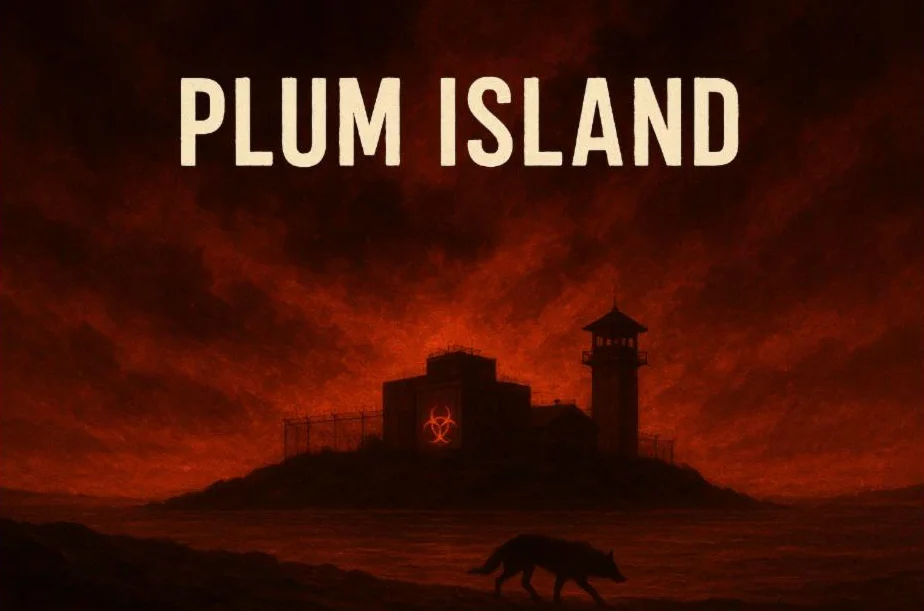
Just off the northeastern tip of Long Island, hidden behind barbed-wire fences and armed security patrols, lies a small piece of land with a big reputation: Plum Island. At first glance, it looks harmless — a windswept, 840-acre island surrounded by quiet waves. But behind the guarded walls of its laboratory, Plum Island has long been the subject of suspicion, fear, and countless rumors of horrors that were never meant to see the light of day.
For decades, this island has been the perfect backdrop for one of America’s most enduring mysteries: what really happened at the Plum Island Animal Disease Center?
A Lab Born in the Cold War
Plum Island’s story begins in the early 1950s, at the height of the Cold War. The United States needed a secure facility to study foreign animal diseases, especially foot-and-mouth disease, which can devastate livestock industries. The Plum Island Animal Disease Center (PIADC) was established under the U.S. Department of Agriculture, with its official mission: protect American farms and food security.
That’s the official line.
But as researchers dug deeper into its history, they discovered ties to Project Paperclip — the secret U.S. program that brought former Nazi scientists to America after World War II. One of these men, Dr. Erich Traub, a virologist and biological warfare expert, reportedly advised on Plum Island’s operations. Traub had once worked for the Third Reich on weaponizing viruses. The idea that his knowledge may have shaped the lab immediately gave Plum Island a darker aura.
Leaks, Accidents, and Escapes
Government documents reveal that Plum Island has not been accident-free. Over the years, researchers reported pathogen leaks and containment failures. Some accounts describe infected animals escaping the island, while others point to dangerous mishandling of samples.
Perhaps the most chilling theory is the alleged link between Plum Island and Lyme disease.
In the mid-1970s, Lyme disease emerged suddenly near Lyme, Connecticut, just a short distance across the water from Plum Island. Local families reported mysterious illnesses, bulls-eye rashes, and debilitating joint pain. Was it a natural outbreak? Or did infected ticks accidentally escape the island?
Officially, the government denies any connection. But skeptics find it too coincidental that Lyme appeared so close — and so suddenly — to Plum Island. Some even argue that ticks themselves were studied there as potential vectors of disease during Cold War experiments.
Whispers of Biological Warfare
The United States officially claimed that Plum Island was not involved in offensive biological warfare. Yet declassified documents from the Cold War suggest otherwise. The island’s remote, heavily guarded location was ideal for testing. Whistleblowers and former workers have hinted at classified research on deadly viruses, exotic pathogens, and hybridized experiments that were never fully disclosed to the public.
If even part of this is true, Plum Island becomes not just a research lab, but a symbol of government secrecy — where science and secrecy blurred into something more sinister.
The Montauk Monster and Other Nightmares
In 2008, a grotesque carcass washed ashore in Montauk, just across the water from Plum Island. Its strange features — beak-like jaws, hairless skin, and an almost human-like shape — sparked immediate speculation. Nicknamed the Montauk Monster, it quickly became a media sensation.
While skeptics dismissed it as a raccoon or a decomposed animal, conspiracy theorists had another explanation: a failed experiment from Plum Island that had escaped or been dumped.
The Montauk Monster wasn’t the only strange tale. Locals have long whispered about bizarre animal sightings and odd mutations linked to the island. Whether rooted in fact or imagination, these stories only added to Plum Island’s eerie reputation.
A Fortress of Silence
Part of what fuels the fear around Plum Island is the government’s secrecy. The island has always been off-limits to the public, its labs hidden behind multiple layers of security. Workers are sworn to silence. Visitors are rare and carefully monitored.
In the absence of transparency, speculation thrives. The less the public knows, the more room there is for wild — and frightening — theories.
Even Congress took notice. In the early 2000s, debates flared over whether Plum Island was a ticking time bomb for disease leaks. Eventually, the government announced plans to close the facility and move operations to a new, state-of-the-art lab in Manhattan, Kansas. But critics wonder: is the move really about modernization, or about leaving behind decades of dangerous secrets?
Why Plum Island Still Haunts Us
The horrors of Plum Island lie in the unknown.
Were exotic animal diseases the only focus, or did the island harbor classified weapons programs? Did ticks carrying Lyme disease really escape its shores? Was the Montauk Monster an experiment gone wrong, or just a decomposed raccoon?
The truth is buried beneath layers of denial, secrecy, and government control. But Plum Island has become a symbol of something larger: our fear of the unknown, and of what powerful institutions may be hiding behind closed doors.
Until every file is declassified and every secret revealed, Plum Island will remain one of America’s darkest mysteries — a reminder that sometimes, what we don’t know can be far more terrifying than what we do.
Advertisement